
Ask, Don't Take
Manning the Dead Zone - VIII

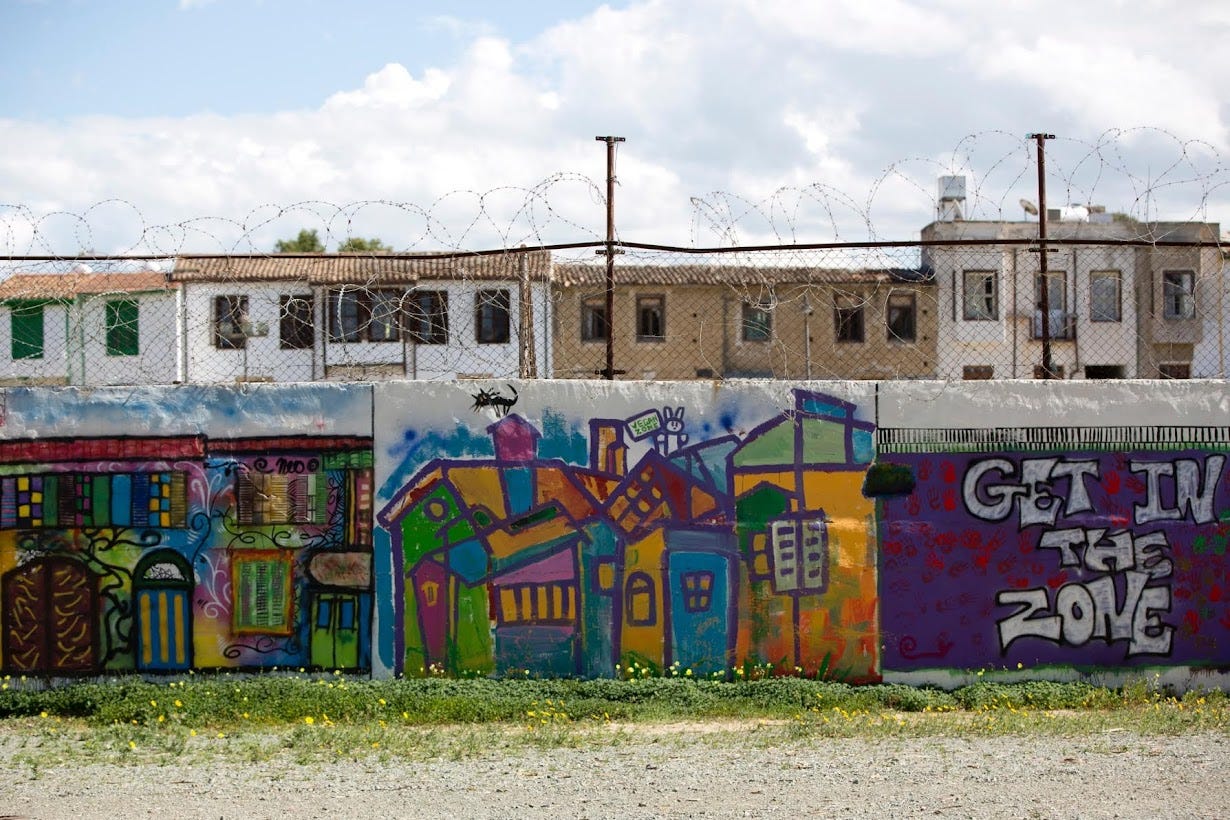
U.N. soldiers often jogged through the buffer zone. Most just waved, but a few stopped to chat: it wasn’t often they met a Cypriot who didn’t view them with disdain, or worse as a “second occupying power.” And why not chat? Some had seen real combat—one nineteen-year-old told me, with a flush of pride, that he’d been RPG’d in Iraq. Cyprus, to them, was basically a holiday posting.
One day our company captain happened to drive by while I was treasonously talking to two U.N. soldiers who’d pulled up in a jeep. By the time he slammed on the brakes and stormed over, they’d already driven off, but he leaned out over the concrete-filled oil drums and called them back.
“Why were you talking to them?” he asked irritably, still watching the jeep reverse toward us. “What did they say to you?”
“Nothing. Small talk. They asked how much longer I had on my shift.”
“And what did you say?”
“Another half hour.”
He exhaled sharply, as if I’d leaked state secrets. The jeep pulled up beside him, blue flag fluttering.
“What were you saying to my OP?” he demanded.
“Just being friendly,” the driver said. He killed the engine, and both soldiers stepped out. The captain stiffened to attention and saluted, but they simply came over smiling and shook his hand. The gesture evaporated much of his suspicion. It’s no surprise militaries don’t encourage chumminess between ranks: without impersonal rituals—the salutes, the stomps, the scripted codes of conduct—the whole hierarchy would wobble.
The captain’s paranoia about fraternizing with the U.N. was typical of the military’s obsession with protocol. During the day, whenever an officer approached, you had to stomp, shout your name and rank, then launch into:
“I report to you, __, that I am serving as sentry on post __ of outpost X __. I report to you that during the duration of my duty…[‘all is well’]”
If the officer were the camp commander or a higher rank, you continued the spiel:
“My mission at the outpost is to execute the duties of the sentry-observer for the surveillance, both day and night, of the terrestrial and aerial space from X to X, to collect every type of information, and to observe and report enemy activities. In the case of an alarm I will… [yadda yadda].”
Unless you could play-act without irony, it’s impossible to do this without feeling like a jackass. The theatrics also interfered with communication. Once, while Turkish troops were firing at a nearby range, an officer approached. I began reciting my script but—focusing on the lines—forgot why. So instead of telling him the Turks were shooting, I said, “All is well,” as gunshots cracked in the distance.
There was, however, one formality I did enjoy. Between sundown and sunrise, you recited nothing. Since you couldn’t see in the dark who was approaching, you simply pointed your rifle at the figure and called out in Ancient Greek: αλτ τισ ει (alt, tis ei – ‘Halt, who goes there?’). Never mind that few Greek speakers understand Ancient Greek. But this wasn’t about pragmatism. It was about Hellenism.
The visitor then had to give two passwords issued earlier that day. Throughout the exchange, you kept your rifle trained on him, ordering him to halt, proceed, halt again.
I relished those nighttime visits. After all the daytime stomping and recitations for every schmuck of high rank who popped by, it was cathartic to aim your gun at those same officers and force them into a game of Red Light, Green Light.
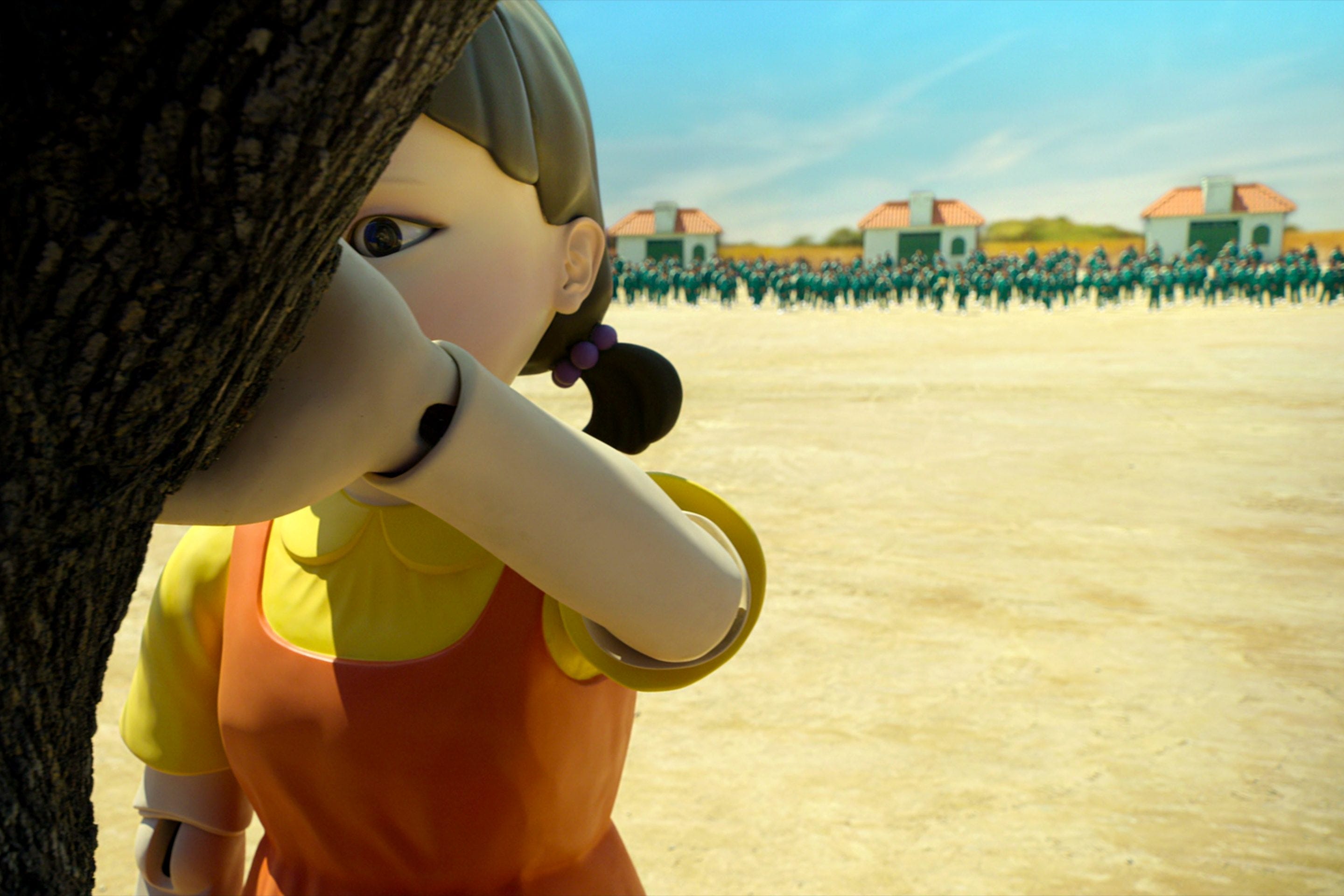
An anti-tank gun exercise took place six weeks into my sentry duty. Heavy-artillery practice happened every month or two. One might imagine conscripts would welcome a change of scenery, let alone the chance to launch a rocket. But no one in my outpost cared, except me. And I wasn’t even scheduled to go, since short-term conscripts were only trained on rifles. I asked anyway, and the camp commander approved.
The training ground was in the mountains, forty minutes southwest of Nicosia. It had been drizzling, and the dirt roads had turned to mud. Trucks couldn’t make the final half-kilometer uphill, so we slogged all the equipment and ammo by hand up through the rain and sucking slop.
Moments after we had assembled several guns and weighted their bases with sandbags, the downpour began. We huddled under a tin shelter, soaked and shivering. Few had thought to bring rain jackets. Beyond the slanting sheets of rain, the sky was a leaden slab. The patter on the aluminum roof was relentless. Fortunately, I’d brought whiskey in my canteen (it got me through the night-shifts). No substitute for a raincoat, but the next best thing.
After an unrelenting half hour, the officers called it off. We lugged all the crates of ammunition back down to the trucks only for the rain to suddenly stop. Another order came: the exercise would resume. So back up we trudged through the mud with the crates.
As usual, the day consisted of hours of waiting for minutes of action. Only four guns had been assembled due to the delays. A half dozen officers—including our commander, colonel and brigadier—stood imperiously on an elevation behind us.
I collected a belt of ten rounds and waited my turn. When the directing officer called the next four of us forward, a conscript officer loaded the belt. The directing officer, speaking through a megaphone, told us to bend down so that ear defenders could be placed on our heads.
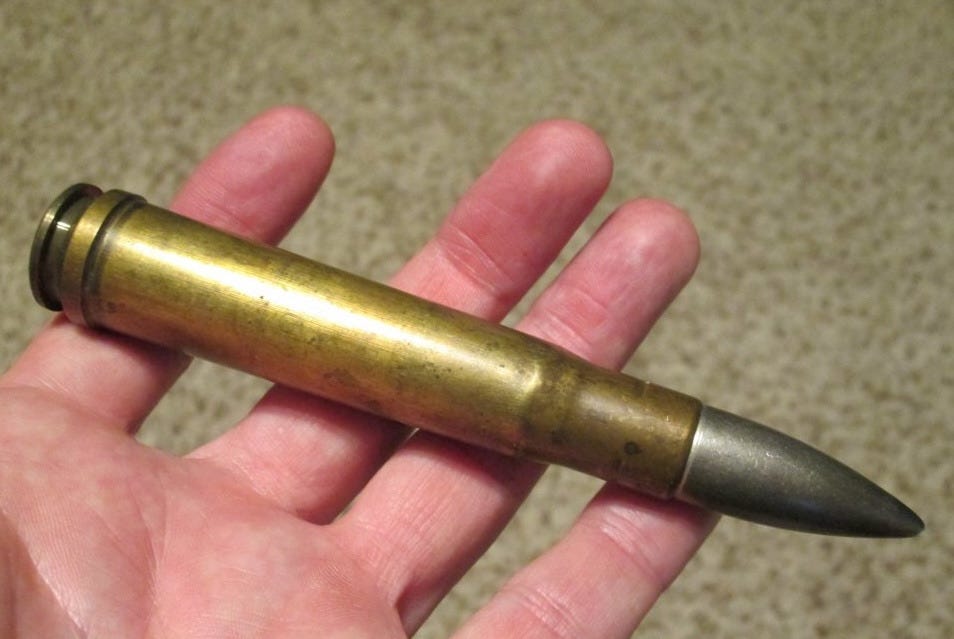
Hundreds of spent 50mm shells lay scattered at the guns’ bases—huge shells that dwarfed the standard 7.62mm assault rifle shells. Any one of them, sawed off, would make a fine bottleneck guitar slide. If I wanted a souvenir, this was my chance. While leaning forward, I snatched a shell from the mud and slipped it into my pocket.
There was a long pause. Then, through the megaphone:
“Take the shell out of his pocket.”
Rather than let them search me, I retrieved it myself and handed it over.
“You think you’re real smart, don’t you?” came the amplified voice.
I turned. The tribunal of officers glared down at me. I shook my head. Sneaking a shell in full view of six officers didn’t make me feel especially clever. I braced for my ejection from the exercise.
Instead, he ordered me to fire with the others. I aimed across the valley and emptied my rounds. To my surprise, he even made a muted comment of approval when my final burst hit the center target.
As I was leaving, my camp commander called my name.
“Why did you do that?” he asked, not waiting for an answer. “For a souvenir?”
I nodded.
“Next time, ask. Don’t take.”
He then held up a shell, tossed it at the feet of a nearby conscript officer, and said:
“Give it to him.”
Then he walked off.
TO BE CONTINUED (only two more, I promise!)
[1] It would be like if you went to buy a train ticket and the attendant said, “Wither goest thou?”
Previous post here:
